
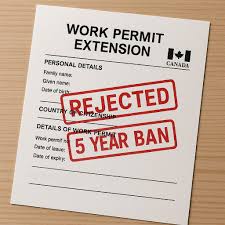
What is a “dummy” work permit extension?
A “dummy work permit extension” isn’t an official IRCC term. People use it to describe submitting a work permit extension (or a new work permit application) that you don’t genuinely qualify for, not because you expect approval, but because you think it will delay things and help you stay longer.
In the reference document you shared, the author explains that PGWP holders sometimes ask about applying for a “fake PGWP extension just to buy some time.”
That “buy time” mindset is exactly what makes this risky.
The real danger: it may not “buy time” — it may trigger faster consequences
One of the biggest misconceptions is:
“Even if it gets refused, I’ll still get a few extra months.”
In reality, an application that looks non-genuine can lead to outcomes that are worse than simply letting your status expire and handling it properly.
The same reference document shares an example where an applicant received a refusal letter and was told to “leave Canada forthwith,” meaning leave immediately.
Fake PGWP extension. Refusal an…
That’s the opposite of “buying time.”
Why IRCC can treat this seriously
A “dummy” filing can raise concerns because it may look like:
-
You’re using the process to delay removal or extend stay without eligibility
-
Your application is not truthful, complete, or consistent
-
You are presenting information in a way that misleads the decision-maker
The document you shared warns that this can lead to an even more serious angle: the officer could consider it misrepresentation and potentially issue consequences under IRPA s. 40(1) (depending on what was submitted and how it was presented).
To be clear: not every refusal becomes misrepresentation. But the risk rises when the application contains false statements, misleading claims, or documents/information that don’t match reality. If someone is advising you to file something you know you don’t qualify for, that’s already a major red flag.
Common myths that lead people into “dummy” applications
Myth 1: “Everyone does it.”
Even if many people try it, that doesn’t make it safe. Bad ideas become popular quickly when people are desperate.
Myth 2: “It’s harmless because I’m not lying.”
You may still be misrepresenting if the application creates a misleading impression (for example, implying eligibility you don’t have, omitting key facts, or using documents that don’t support the category).
Myth 3: “Worst case, it’s just a refusal.”
As the reference example shows, sometimes the outcome is not just a refusal—it can include instructions to leave Canada immediately.
Red flags you’re being pushed into a dangerous strategy
Be careful if anyone tells you:
-
“Apply anyway, it doesn’t matter if you qualify.”
-
“Pick any category, it’s just to keep status.”
-
“Submit something now; we’ll fix it later.”
-
“Don’t worry—IRCC won’t check.”
-
“If it’s refused, at least you stayed longer.”
If the strategy depends on you not being eligible, it’s not a strategy—it’s gambling with your future.
What to do instead (safer directions to explore)
Every situation is different, but here are legitimate directions people usually explore when time is running out:
-
Apply under a work permit category you actually qualify for
This could involve employer support, LMIA-based options, LMIA-exempt categories (where applicable), or other lawful pathways. -
Change status if work authorization is ending
If your ability to work is ending and you don’t qualify to extend your work permit, a legal change of status (like to visitor) may be a safer bridge while you plan next steps. -
Restoration (if you’ve already lost status and are eligible)
Some people may qualify for restoration within the allowed window—this is fact-specific and time-sensitive. -
Build a real Plan A / Plan B
A proper plan usually answers:
-
What status can you hold next month legally?
-
What pathway can you realistically qualify for in 3–6 months?
-
What documents do you need now (reference letters, NOC alignment, employer support, proof of funds, etc.)?
The reference document’s main message is a strong one: don’t take “undeserving routes just to buy some time.”
Final takeaway
A “dummy” work permit extension is often sold as a harmless delay tactic. But it can backfire quickly—sometimes with a refusal that includes instructions to leave Canada immediately, and in more serious cases it can raise misrepresentation concerns depending on what was filed.
If your status is expiring, the safest move is not to “buy time” with a weak filing—it’s to choose a real, eligible pathway and protect your long-term immigration future.
Disclaimer: This article is for general information only and isn’t legal advice. Immigration options depend on your full facts, documents, and timelines.